

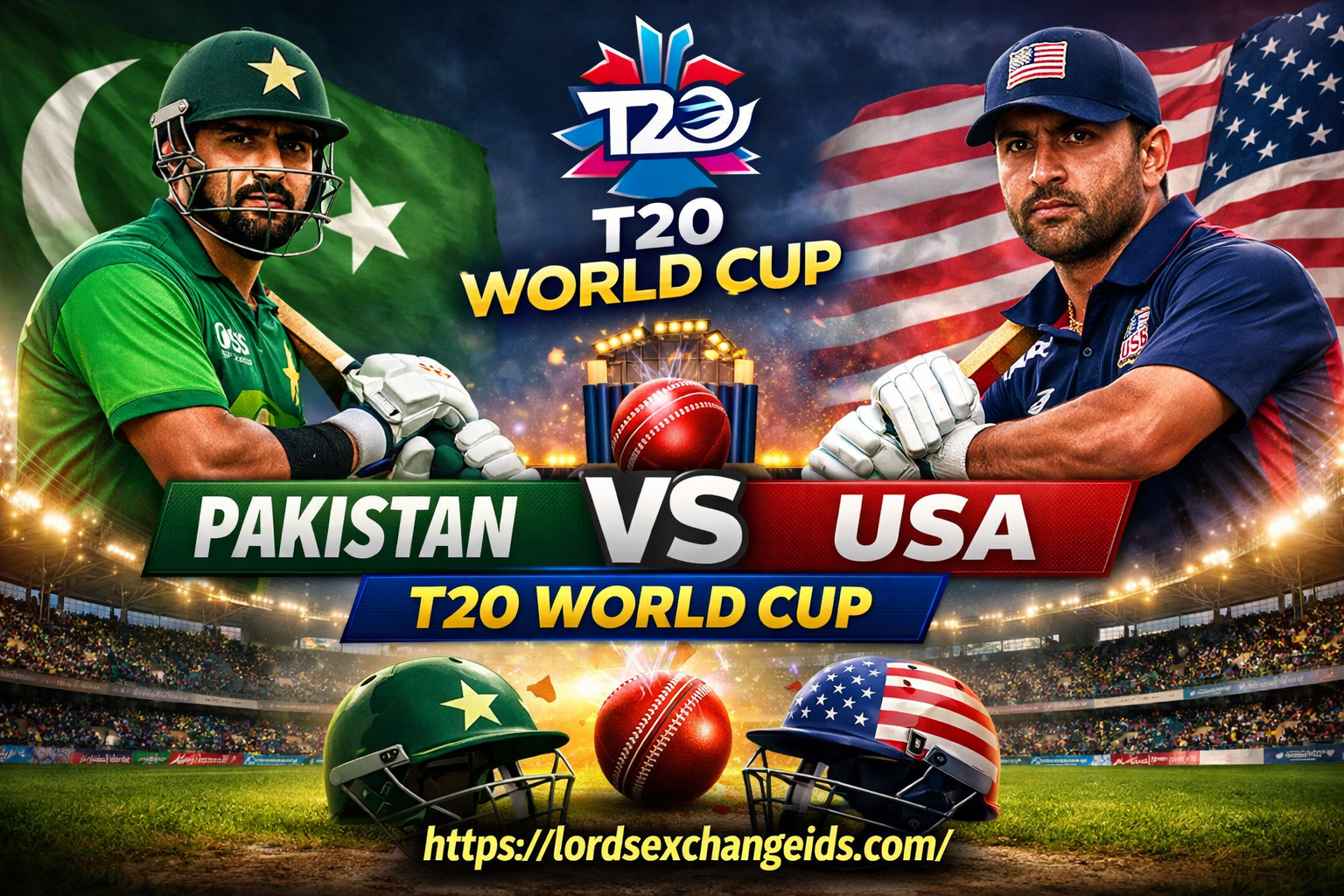
When I started covering associate cricket a decade ago, a match like Pakistan vs USA would barely make a headline. Now it sits inside a World Cup group stage with real consequences. That alone tells you how much the game has shifted.
Group A already looks like a Lord exchange App tight on paper. Pakistan arrive with pressure. USA arrive with momentum and nothing to lose. I spoke with two former team analysts last season who both said the same thing: Pakistan struggle more against unfamiliar teams than elite ones. That makes this fixture more interesting than it sounds.
Match Context and Group Pressure
Pakistan vs USA usually plan their group matches as two guaranteed wins and one high-risk clash. The problem is that the “guaranteed” part doesn’t exist anymore.
United States cricket has grown through:
- Franchise exposure
- Players with subcontinent roots
- Tactical T20 awareness
Cause and effect is simple. More competitive domestic leagues in the US produce players who understand pressure overs.
If Pakistan drop this match, qualification math becomes uncomfortable.
Pakistan Team Analysis
Batting Core
Pakistan’s top order still revolves around tempo control rather than brute force. That works when conditions favor stroke play. It fails when early wickets fall.
From what I’ve observed in recent tournaments, Pakistan’s problem is not talent. It’s predictability.
- Powerplay scoring depends on two batters
- Middle overs slow down
- Finishers face too much pressure
Against structured bowling units like Pakistan vs USA, that pattern can be exposed.
Bowling Strength
This is Pakistan’s insurance policy.
Their fast bowlers bring:
- New-ball movement
- Death over yorkers
- Psychological pressure
One former Pakistan bowling coach told me off record: “We don’t defend totals. We intimidate batters.”
That works if the pitch offers help.
United States Team Analysis
Batting Approach
USA batters don’t play classical T20. They play percentage cricket.
That means:
- Fewer risky shots early
- Heavy targeting of one weak bowler
- Strike rotation as priority
I saw this firsthand in a tri-series where they chased 165 without hitting more than eight sixes.
Problem: They struggle when early wickets fall.
Solution: Build around one anchor and one hitter.
Bowling Unit
USA bowling relies more on discipline than pace.
- Hard lengths
- Wide yorkers
- Slower balls
They aim to create mistakes rather than force them.
Against Pakistan, that can work because Pakistan batters like rhythm. Breaking rhythm creates panic.
Pitch and Conditions Factor
Group A venues are expected to be balanced surfaces. Not flat highways.
Likely behavior:
- First 6 overs help seamers
- Middle overs slow
- Chasing slightly easier
That favors the team with better bowling plans. Pakistan fit that model. USA fit the control model.
Weather matters too. Pakistan vs USA Evening humidity brings swing. That could decide the match in the first 12 balls.
Tactical Battles to Watch
Powerplay vs Discipline
Pakistan want quick runs early.
USA want dot balls early.
If USA survive the first four overs without damage, pressure shifts to Pakistan.
Spin Match-up
USA’s middle order struggles against wrist spin. Pakistan will exploit that.
If Pakistan vs USA waste their spinners early, they lose control.
Real-World Betting Perspective
When I interviewed match traders during previous tournaments, they said one thing clearly: associate teams change odds behavior.
Pakistan usually open heavy favorites. But smart traders watch:
- Toss result
- First 2 overs
- Pitch pace
On platforms like Lord exchange, these micro-moments often move markets faster than full innings performances. That’s because associate teams don’t follow predictable scripts.
This match will not behave like Pakistan vs USA. It will behave like Pakistan vs uncertainty.
That’s why Lord exchange users usually wait for live play rather than pre-match positions.
Problem–Solution Format
Problem: Pakistan underestimate associate teams.
Effect: They lose early wickets or misjudge bowling changes.
Solution:
- Conservative start
- Let bowlers defend
- Avoid chasing miracles
For USA:
Problem: Pressure collapses batting.
Effect: Middle overs stagnate.
Solution:
- One set batter plays long
- Attack only one bowler
- Take match deep
These patterns decide such games more than star names.
Expert Observation
One ICC development officer told me last year: “The gap between Full Members and Associates is now tactical, not technical.”
That’s visible here. Pakistan vs USA players might not match Pakistan in raw skill. But they match them in decision-making windows.
And in T20, windows matter more than shots.
Lord exchange and Match Behavior
Why This Match Attracts Attention
Matches involving underdogs create:
- Sharp odds swings
- Emotional reactions
- Overcorrections
On Lord exchange, this fixture will likely show volatility during powerplay overs. That’s when public belief meets on-field reality.
What Experienced Users Watch
They don’t watch names. They watch patterns:
- Is Pakistan rotating strike?
- Is USA holding line and length?
- Is spin introduced early?
Those details shape the second innings before it begins.
Key Takeaways
- Pakistan carry pressure, not comfort
- USA carry belief, not fear
- Pitch conditions may decide more than players
- Early overs define momentum
This is not a mismatch. It’s a test of preparation versus reputation.
If Pakistan win, it will be because they respected the opponent.
If USA win, it will be because Pakistan didn’t.
And that’s why this 12th Group A match matters more than its schedule position suggests.